


Whoa! I remember the first time I tapped a smart card wallet to my phone and felt like I was holding the future in my palm. It was simple, almost astonishing, and it solved a real friction point for managing private keys on the go. NFC makes that possible by letting secure elements communicate without messy cables or complicated pairing. Initially I thought physical hardware wallets had to be bulky and intimidating, but then I realized that smart card wallets compress the same rigorous security model into a slim, familiar form factor that fits in a wallet and behaves like a contactless credit card, which changes user expectations and adoption dynamics.
Seriously? Yes, really—smart card wallets use an embedded secure element that isolates keys and signs transactions without revealing the private key. That isolation is critical because it reduces attack surface compared with leaving keys on a general-purpose phone. On one hand the NFC link itself carries low bandwidth and brief sessions, which seems like a limitation, though actually it becomes a security feature because short-lived, proximity-based interactions are easier to audit and harder to intercept when devices require physical near-field presence. My instinct said ‘this will be messy’, but after testing multiple cards I found that well-designed smart cards pair crisp UX with standards like ISO 14443 and secure element certifications that, together, elevate both convenience and cryptographic hygiene for everyday users who aren’t crypto nerds.
Hmm… Here’s the thing: people confuse ‘NFC’ with ‘not secure’ because radio feels invisible and voodoo-y. But proximity alone is a strong control; a card must be within a few centimeters to interact, and that inherently reduces remote attack vectors. Still, proximity doesn’t solve everything and it’s naive to assume delightful UX equals perfect security. Actually, wait—let me rephrase that: smart card wallets mitigate a suite of risks, yet they introduce new usability tradeoffs and recovery-model challenges that designers must reckon with, especially for users who might lose the card or forget their backup seed, which demands thoughtful backup strategies and clear user education.
Here’s the thing. I once watched a friend almost throw her old hardware wallet in a drawer because it felt cumbersome. A card she could tap replaced that friction overnight. On one hand hardware wallets like a card reduce everyday friction and make tapping to sign feel natural, though on the other hand they force you to treat the card like cash—if you lose it the recovery process must be simple enough for non-technical people, and that balance is very very important. Somethin’ felt off about early smart-card implementations where backup relied on obscure QR flows, and developers learned to pair card wallets with clearer on-boarding and restore experiences that guide users through deterministic recoveries without exposing seeds.
Wow! Security models matter because attackers adapt. A stolen card is a real-world threat, but PINs, biometric pairing, and optional self-destruct counters add layered defenses. NFC cards often include tamper-resistant secure elements certified to common criteria levels, which gives enterprises and cautious users measurable assurance. Initially I thought certification alone would make a product trustworthy, but then I realized trust also comes from transparent firmware updates, open standards, and clear recovery processes that together create a credible ecosystem rather than a closed black box.
Really? Yes—open ecosystems let independent auditors verify claims and provide community pressure for responsible design. Closed systems can be convenient, but they often hide details that matter for long-term custody. On one hand people want plug-and-play experiences, though actually security nuancing requires some user education and interface design that gently teaches when a card is performing a sensitive action without overwhelming the user. I’ll be honest: I’m biased toward solutions that give users control and visibility over cryptographic operations, because in my experience those products endure and build trust over years, not just months.
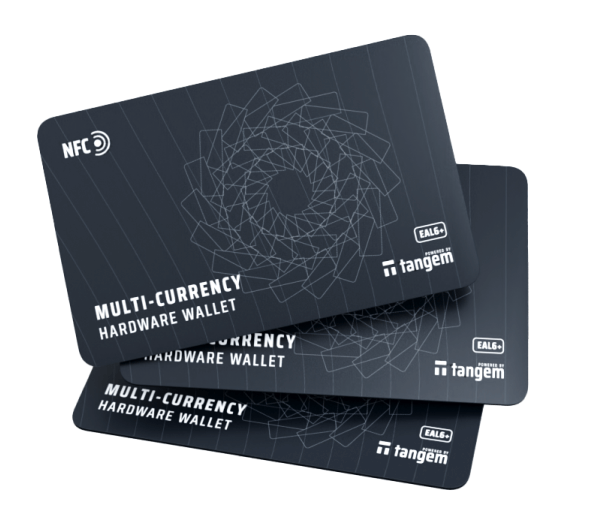
Whoa! Tangem’s approach, for example, turns a card into a user-friendly security appliance. If you want a physical touchpoint to your keys that integrates with phones and wallets, that design is compelling. I tested it on both Android and iOS and the tap-to-sign flow felt immediate and confident. The product also demonstrates that NFC smart cards can live in regulated contexts—from payments-style use to institutional custody—because they can implement standardized APDUs and hardware-backed key storage while remaining thin, embeddable, and familiar to consumers who already understand contactless cards.
Why a smart card might be right for you
Hmm… Okay, so check this out—if your goal is daily spend-and-sign convenience, a card wallet is hard to beat. But you have to think about lifecycle: issuance, lost-card recovery, firmware updates, and supply-chain trust. On one hand NFC’s simplicity lets designers hide complexity, though on the other hand that opacity can make incident response messy if users don’t understand provenance and update status, which is why visible provenance and a clear recovery pathway are non-negotiable for serious adoption. My instinct said that hardware reliability would be the gating factor in real-world deployments, and in practice the cards that survived rigorous environmental tests and offered straightforward restore methods were the ones customers stuck with.
Seriously? This is where solutions like the tangem hardware wallet shine for everyday users. They package the secure element, NFC UX, and a guided recovery model into a product that takes some of the blame off the user. Integration with popular wallets and standards reduces fragmentation and lowers onboarding friction. On one hand no single product is perfect for every threat model, though actually having a slim, certified smart card with clear instructions and optional PIN protection covers the majority of consumer scenarios while allowing power users to layer additional controls if needed.
Here’s the thing. If you’re considering a smart card wallet, start with your threat model: is theft the primary concern, or are you worried about remote compromise and phishing? For theft-focused risks, physical controls and PINs help; for phishing, hardware signing and transaction previews are your friends. Initially I thought recommending a single device was straightforward, but then I realized recommendations must account for habits, backup discipline, and whether a user prefers edge simplicity or granular control, so my pragmatic advice is to test the tap experience, verify recovery steps before moving funds, and use multi-factor approaches when available. I won’t pretend this is the last word—some questions remain, like how the next generation of phones will handle secure elements and whether regulation will reshape custody models—but overall smart card NFC wallets are a pragmatic, elegant bridge between high-security hardware and everyday crypto usability, and that matters a lot for wider adoption.
FAQ
How secure is NFC compared with traditional USB hardware wallets?
NFC itself is a transport layer with proximity constraints, and when paired with a certified secure element and good UX (PINs, transaction previews, firmware checks) it offers comparable cryptographic guarantees to USB devices while improving convenience for mobile-centric users.
What should I do if I lose my smart card wallet?
Follow the recovery process documented by the vendor before you transfer significant funds—verify recovery seed or backup method on a test run first, enable PIN/biometric locks, and consider splitting funds across devices for high-value holdings.
